Create a cinematic text-to-video scene featuring an original non-copyrighted moment where a census worker in a rural region reaches an extremely remote homestead at dusk and discovers an elderly woman who has been living entirely alone for twenty-three years following the death of her husband, who has not been counted in any census since 1999, and who, when asked the census questions, answers with such specific and vivid detail about her daily life that the census worker — whose job is to record data — finds herself simply sitting at the kitchen table listening long past the official requirements of the visit. The mood is richly human, about the lives that exist outside visibility, with a documentary warmth feeling.
The drive is forty minutes on an unpaved road. The homestead is real and functioning — the woman has a vegetable garden, chickens, a woodpile that suggests serious competence. She opens the door without surprise, as if she expected someone eventually. She makes tea without being asked — the kettle was already on. She answers every census question precisely and without elaboration. Then the census worker finishes her form and does not immediately stand to leave.
The woman talks about her winter routine, her garden calendar, a fox that has been visiting the chicken coop for three years that she has not killed because she has come to respect its persistence. She talks about the radio programs she prefers and why. She talks about her husband — not with grief, with the specific warmth of someone who keeps someone present through the act of mentioning them. The census worker misses her last two appointments of the day. She does not realize until she is back in her car in the dark.
Visual tone: hyper-realistic observational drama quality, remote homestead at dusk — the specific quality of rural evening light, the self-sufficient homestead as a world complete in itself, kitchen interior warm against the outside dark arriving, premium domestic detail — the kettle, the cups, the table worn smooth, the census form as an official document in an unofficial conversation, the census worker's face as the scene's emotional register. Camera language: unpaved road approach, homestead arrival, the woman opening the door — no surprise, tea being made, census questions sequence — form and her face answering, form completion and not leaving, the conversation beginning, specific details — the fox story, the radio programs, the husband mentioned and present, the census worker's face moving through professional to something else, window showing dark arriving outside, census worker in her car in the dark — the appointments missed, the form filled, something else also having happened. Include: homestead ambient — the specific quiet of remote rural evening, chickens, the kettle, the kitchen's warmth, the census worker's pen, tea cups, and the sound of a woman talking about her life to someone who came to count her and stayed to hear her.
Create a cinematic text-to-video scene featuring an original non-copyrighted moment where a census worker in a rural region reaches an extremely remote homestead at dusk and discovers an elderly woman who has been living entirely alone for twenty-three years following the death of her husband, who has not been counted in any census since 1999, and who, when asked the census questions, answers with such specific and vivid detail about her daily life that the census worker — whose job is to record data — finds herself simply sitting at the kitchen table listening long past the official requirements of the visit. The mood is richly human, about the lives that exist outside visibility, with a documentary warmth feeling.
The drive is forty minutes on an unpaved road. The homestead is real and functioning — the woman has a vegetable garden, chickens, a woodpile that suggests serious competence. She opens the door without surprise, as if she expected someone eventually. She makes tea without being asked — the kettle was already on. She answers every census question precisely and without elaboration. Then the census worker finishes her form and does not immediately stand to leave.
The woman talks about her winter routine, her garden calendar, a fox that has been visiting the chicken coop for three years that she has not killed because she has come to respect its persistence. She talks about the radio programs she prefers and why. She talks about her husband — not with grief, with the specific warmth of someone who keeps someone present through the act of mentioning them. The census worker misses her last two appointments of the day. She does not realize until she is back in her car in the dark.
Visual tone: hyper-realistic observational drama quality, remote homestead at dusk — the specific quality of rural evening light, the self-sufficient homestead as a world complete in itself, kitchen interior warm against the outside dark arriving, premium domestic detail — the kettle, the cups, the table worn smooth, the census form as an official document in an unofficial conversation, the census worker’s face as the scene’s emotional register. Camera language: unpaved road approach, homestead arrival, the woman opening the door — no surprise, tea being made, census questions sequence — form and her face answering, form completion and not leaving, the conversation beginning, specific details — the fox story, the radio programs, the husband mentioned and present, the census worker’s face moving through professional to something else, window showing dark arriving outside, census worker in her car in the dark — the appointments missed, the form filled, something else also having happened. Include: homestead ambient — the specific quiet of remote rural evening, chickens, the kettle, the kitchen’s warmth, the census worker’s pen, tea cups, and the sound of a woman talking about her life to someone who came to count her and stayed to hear her.
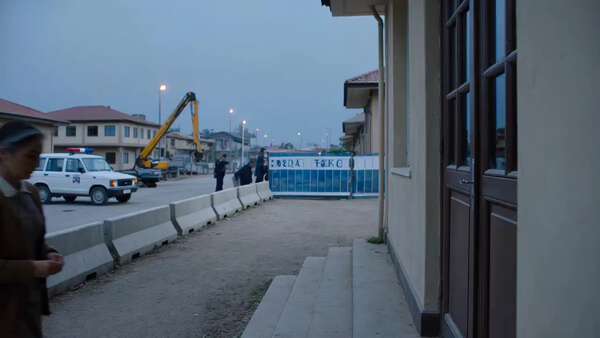
Create a cinematic text-to-video scene featuring an original non-copyrighted moment where a librarian in a small town on a contested border region has, for thirty years, maintained the only library that serves both communities quietly, without political statement, by simply never closing to anyone and on the day a new checkpoint goes up on the road outside, she opens the library two hours early and props the door wide. The mood is quietly radical, stubbornly ordinary, deeply principled, and human in the most specific possible way, with an observational drama feeling. She arrives before dawn. The checkpoint construction began last night concrete barriers, temporary fencing, official vehicles. She can see it from the library steps. She unlocks the door, goes inside, turns on the lights, makes tea in the back room, and props the front door open with the same brick she has used for thirty years.
The first patron arrives a farmer from the eastern community who has been coming every Thursday for twenty years. He nods. She hands him the book she has been holding for him. The second patron arrives from the western side, a teenage girl with a school bag. She comes in without looking at the checkpoint. She is here for the same reasons she is always here.
Visual tone: hyper-realistic observational quality, small-town library interior worn but loved, every surface evidence of use and care, morning light arriving through windows as the day opens, premium detail in books, in the librarian's hands, in the faces of patrons for whom this is simply routine, the checkpoint visible through the window as background fact never made foreground drama.
Camera language: pre-dawn library exterior, door unlocking close-up, interior lights coming on wide shot, tea-making in back room, door propping with brick close-up, standing on steps looking at checkpoint her face making no speech, first patron arrival wide shot, book handoff close-up, teenage girl arrival, library interior with both patrons and librarian ordinary morning, checkpoint through window soft-focus background, wide shot of open door with light coming in.
Include: morning quiet, the specific sound of a library opening lights clicking on, a kettle, a door propped open, pages, the absence of any sound that announces what this woman is doing and why it matters.
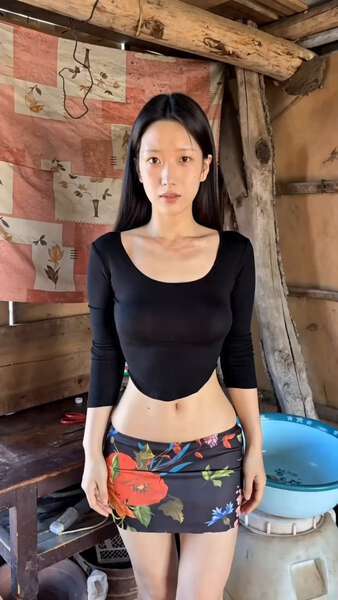
做个韩式脸擦边悲情故事流。是不是太丧了? SEEDANCE PROMPT: 아이폰으로 촬영한 보정되지 않은 핸드헬드 영상 스타일로 제작되었으며, 모든 카메라 설정은 자동이고 색 보정이나 특수 효과는 후처리되지 않았습니다. 영상에는 실제 핸드헬드 촬영 특유의 미세한 흔들림과 촬영자의 숨소리가 담겨 있으며, 자동 초점의 탐색 및 지연 현상과 따뜻한 자연광과 주변 그림자 사이를 자연스럽게 전환하는 자동 화이트 밸런스가 특징입니다. 전체적인 이미지는 평면적이며, 사실적인 렌즈 플레어, 약간의 과다 노출, 모션 블러가 그대로 표현되어 있습니다. 바람 소리, 멀리서 들려오는 새소리, 오두막 내부 소리, 미묘한 여성의 숨소리 등 카메라에 내장된 자연스러운 주변 음향 효과만 사용되었습니다. 1인칭 시점의 핸드헬드 촬영으로 카메라 움직임은 자연스럽고 피사체의 움직임을 역동적으로 따라가며, 장면 변화에 따라 앵글이 조정됩니다. 젊은 아시아 여성의 외모는 [hf_20260531_070256_ba357bcb-4f12-41b9-8c19-c74da1eb1603]에서, 그녀의 옷과 배경은 [image_20260527072336_306_19(1)]에서 완전히 참조되었습니다. 그녀는 시골 오두막 안에 서 있었고, 검은 머리는 올려 묶은 스타일이었으며, 검은색 긴팔 크롭탑과 검은색 꽃무늬 스커트를 입고 반짝이는 하이힐을 신고 있었습니다. 배경에는 누더기 커튼, 나무 테이블, 커다란 테라코타 화분, 그리고 여러 가지 잡동사니가 있었고, 왼쪽에서 들어오는 자연광이 소박하고 따뜻한 분위기를 자아냈습니다. 0초에 카메라는 미디엄 샷으로 그녀에게 초점을 맞추었습니다. 그녀는 프레임 중앙에 서서 손을 자연스럽게 옆구리에 늘어뜨리고 있었고, 표정은 차분하면서도 약간 사색에 잠긴 듯했습니다. 부드럽고 따뜻한, 애틋한 감성이 담긴 여성의 목소리가 들려왔다. "억울한 일이 있을 때, 왜 어떤 사람들은 허공에 대고 반항하는지 아세요?" 1초 후, 그녀는 천천히 고개를 숙여 땅을 바라보았다. 눈빛은 멍했고, 몸은 무언가를 떠올리는 듯 살짝 흔들렸다. 그러다 천천히 몸을 돌려 왼쪽의 누더기 커튼 쪽으로 걸어갔다. 카메라가 옆에서 그녀를 따라갔다. 2초 후, 목소리는 더욱 부드럽고 온화해졌다. "어렸을 때, 할아버지와 함께 마당에서 채소에 물을 주곤 했어요. 할아버지는 물을 주면서 작은 소리로 욕을 중얼거렸는데, 무슨 욕이었는지는 모르겠어요." 그녀는 커튼으로 걸어가 창밖을 내다보았다. 입술은 살짝 오므리고 있었다. 카메라가 뒤에서 살짝 줌인했다. 4초 후, 그녀는 고개를 들었다. 눈에는 혼란과 슬픔이 가득했고, 몸을 돌려 천천히 나무 테이블 쪽으로 걸어갔다. 카메라가 옆에서 그녀를 따라갔다. 내레이션은 계속된다. 목소리는 여전히 부드럽다. "나중에 저는 학교를 그만두고, 일을 하고, 결혼하고, 이혼했어요. 어느 날, 음식을 배달하러 가는 길에 갑자기 허공에 대고 욕을 하기 시작했죠." 6초, 그녀는 나무 탁자로 걸어가 몸을 살짝 앞으로 기울인다. 손은 탁자 가장자리에 가볍게 얹고, 시선은 약간 흐릿해진다. 입술은 마치 허공에 속삭이듯 움직이고, 억눌린 감정이 가득한 표정을 짓는다. 카메라가 그녀의 어깨 위에서 줌인한다. 8초, 그녀는 천천히 몸을 바로 세우고, 시선은 부드러워지며, 안도감이 감도는 듯 입꼬리가 살짝 올라간다. 그녀는 몸을 돌려 커다란 토기 항아리 쪽으로 걸어가고, 카메라가 뒤에서 그녀를 따라간다. 내레이션은 계속된다. 이해심 많고 부드러운 어조로. "욕을 하는 순간, 문득 할아버지 생각이 났어요. 그 순간, 할아버지는 남에게 욕을 하는 분이 아니었다는 걸 깨달았죠." 11초, 그녀는 항아리로 걸어가 고개를 살짝 들고 카메라를 똑바로 바라보았다. 그녀의 눈빛은 차분하고 온화했으며, 이해와 안도감이 가득했다. 카메라가 천천히 옆에서 그녀의 얼굴로 이동했다. 부드럽고 진솔한 목소리로 내레이션이 마무리되었다. "그는 자신을 저주하고 있었습니다. 억울한 일을 당했지만 어떻게 맞서 싸워야 할지 몰랐던 자신을." 13초, 그녀는 몸을 살짝 이완했지만 시선은 여전히 카메라에 고정되어 있었고, 입가에는 희미하고 온화한 미소가 걸려 있었다. 그녀는 천천히 화면 중앙으로 걸어왔다. 14초, 카메라가 살짝 흔들렸다. 그녀는 여전히 서 있었고, 표정은 차분하고 안도되어 있었다. 15초, 따뜻하고 자연스러운 빛 속에서 장면은 자연스럽게 끝났다. 이 영상은 아이폰으로 손으로 들고 촬영한 영상 특유의 사실적이고 보정되지 않은 모습, 다큐멘터리 수준의 자연스러운 불완전함을 보여주었으며, 후반 작업에서 색 보정이나 특수 효과를 전혀 사용하지 않았다. 모든 카메라 움직임은 실제 시골 통나무집에서 손으로 들고 촬영했을 때의 물리적 특성을 반영했다. 내레이션은 부드럽고 섬세한 감정을 담은 여성의 목소리로, 마치 그녀가 자신의 이야기를 조용히 들려주는 듯하다. 카메라 앵글은 주인공의 위치에 따라 자연스럽게 변화한다.
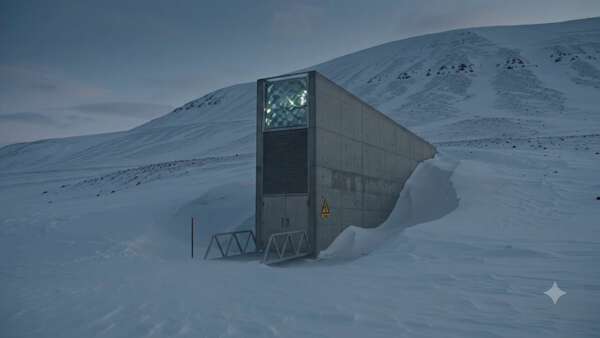
Create a cinematic text-to-video scene featuring an original non-copyrighted moment where a seed bank curator in an Arctic facility receives a shipment of seeds from a botanical garden in a conflict zone the last living samples of seventeen plant species, evacuated by a botanist who stayed behind to do it and processes them into long-term storage with the specific care and professionalism of someone who understands that what she is putting into the vault today may be the reason something beautiful exists in a hundred years. The mood is quietly heroic by proxy, scientifically tender, about the long-chain human effort of preservation, with a documentary realism feeling. The shipment arrives with documentation in two languages and a handwritten note from the botanist she has corresponded with for eight years but never met, whose name she knows from dozens of professional emails, who is still in the city that was being shelled when he sent these. The seeds are properly packaged he did it right, under whatever conditions he did it under. She checks each sample against the documentation. Seventeen species. All present.She processes them according to protocol moisture testing, viability assessment, labeling, the specific cold chain steps that are the difference between a seed that can germinate in a century and one that cannot. She works slowly, carefully, with the attention of someone who knows what these specific seeds cost to get here. When the last sample is sealed and logged, she sits for a moment. Then takes his note handwritten, brief, professional and puts it in the physical archive file with the seed documentation. So that whoever opens this vault in fifty years knows his name.
Visual tone: hyper-realistic scientific facility quality, Arctic seed bank interior cold, functional, the specific visual language of long-term preservation premium seed sample and documentation texture, her hands in processing gloves as primary subjects, the handwritten note as the human artifact inside the scientific process, the vault as the scene's implied destination and meaning, the cold as a constant visual and physical presence.
Camera language: facility exterior Arctic, remote, the vault in the landscape, receiving the shipment, documentation check, sample verification sequence seventeen species confirmed, her face on each one, processing work moisture testing, labeling, cold chain steps in real procedural time, the last sample sealed and logged, sitting for a moment, the handwritten note, reading it close-up, opening the physical archive file, putting the note in his name now in the vault record, closing the file, the vault door, the facility interior with the work complete, Arctic exterior the facility in the landscape, holding what she just put in it.
Include: facility ambient cold air ventilation, the specific quiet of a temperature-controlled preservation environment, processing equipment, her movements in cold conditions, the note unfolding, the archive file, the vault closing, and the Arctic wind outside a building that is keeping something alive for people who are not born yet.
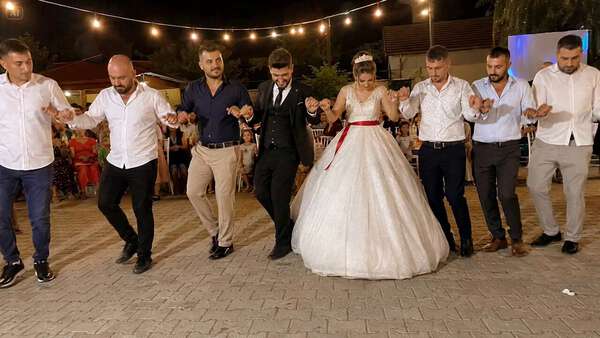
15-second cinematic Turkish wedding celebration, inspired by the attached reference image.
Style:
Ultra-realistic wedding documentary, handheld wedding cinematography, vibrant Turkish village wedding atmosphere, high energy, joyful chaos, authentic celebration, warm evening lighting, festive string lights overhead.
Audio:
Traditional Turkish Halay music from the very first frame.
Fast tempo davul and zurna.
Crowd clapping in rhythm.
Cheering, laughter, joyful shouts.
No romantic music.
No slow moments.
Constant energy throughout.
0:00 - 0:02
Hook shot.
Close-up of synchronized feet performing fast Halay steps on the stone courtyard.
Dust kicks up from the ground.
Powerful davul beats hit immediately.
0:02 - 0:04
Fast cut.
Bride in sparkling white wedding dress with red ribbon belt dances energetically in the Halay line.
Guests smile and shout encouragement.
Camera circles around the group.
0:04 - 0:06
Wide shot.
Long Halay chain moving dynamically across the dance floor.
Men and women holding hands, stepping in perfect rhythm.
String lights glow overhead.
0:06 - 0:08
Rapid close-ups.
Hands linked together.
Feet stomping.
Bride laughing.
Guests clapping loudly to the beat.
Quick energetic cuts.
0:08 - 0:10
Low-angle tracking shot moving alongside the dancers.
Fast synchronized Halay footwork.
Wedding guests cheering from tables in the background.
0:10 - 0:12
Camera dives into the crowd.
Children dancing.
Older relatives clapping and singing.
Everyone moving with the music.
0:12 - 0:14
Fast rotating shot around the bride and groom as they lead the Halay.
Dress swirling.
Crowd erupts with excitement.
Continuous music and celebration.
0:14 - 0:15
Final explosive wide shot.
Entire wedding party dancing together.
Hands raised.
Massive energy.
Music reaches peak intensity as the frame ends.
Visual keywords:
Turkish wedding,
Halay dance,
davul zurna,
celebration,
festival atmosphere,
authentic wedding documentary,
multishot,
close-ups,
wide shots,
handheld camera,
energetic crowd,
warm night lighting,
string lights,
joyful chaos,
constant movement,
cinematic realism.
Negative prompts:
slow motion,
romantic scenes,
kissing,
emotional crying,
empty dance floor,
still camera,
silence,
sad mood,
formal posing,
staged photography,
text,
captions,
watermarks.
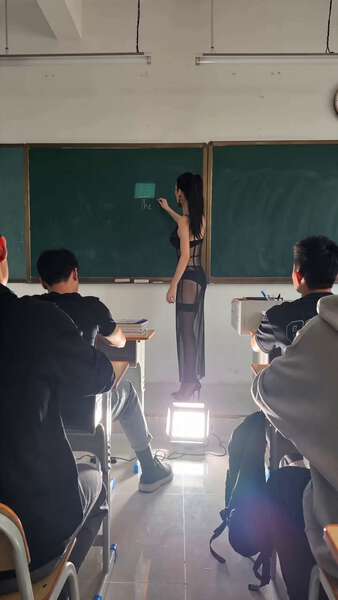
Presented in a style that resembles real video footage captured with an unprocessed iPhone handheld camera. All camera settings are automated, with no post-processing coloring or special effects applied. The footage features genuine handheld vibrations and the slight movement due to the operator's breathing. Autofocus occasionally experiences delays and brief loss of focus. Automatic white balance switches rapidly between strong lighting from flashlights and ambient classroom light. The image is overall flat, preserving the real-life lens flare, edge blurriness, slight overexposure, and motion blur. Only natural environmental sounds from within the scene are used, including sounds of chalk writing, page turning, student whispers, and recording notifications from the phone. The footage is captured from a first-person handheld perspective from behind the classroom. The camera movement is natural, with slight shaking occurring occasionally due to nervousness. A tall, short-haired Asian female teacher is depicted in the footage.
Clothing
She stood in front of the classroom blackboard. She had a well-proportioned figure, with a delicate makeup, and wore a pair of black-rimmed glasses. A high-intensity lighting source was placed on the floor in front of the classroom, shining brightly upwards. At 0 seconds, the camera was positioned behind the classroom, focusing on the female teacher as she stood sideways in front of the blackboard, writing with chalk. The high-intensity light from below illuminated her body, creating a strong backlight effect and prominent highlights. At 1 second, the light passed through the semi-transparent fabric of her black net dress, clearly highlighting the contours of her thighs, hips, and body. The autofocus briefly lost focus due to the intense light, but then re-established itself. At 2 seconds, the female teacher continued to write on the blackboard, and the sound of chalk against the blackboard was clearly audible. Fine chalk dust floated in the air of the classroom. At 3 seconds, the student on the left side of the front row already noticed the bright light around them. Excitedly, she took out her phone and started recording the teacher secretly. The reflection on the screen made a brief flash in the video. At 4 seconds, the female teacher finished writing, put down her chalk, and turned to face the students. At 5 seconds, she picked up the dark red textbook on the table, held it with both hands, and stood up straight. At 6 seconds, the female teacher began teaching, holding the textbook in her hands, with her gaze directed towards the back of the classroom. The bright light from below made her silhouette even more distinct. At 7 seconds, the students in the front row already started talking in low voices. The student on the left continued to record secretly, while the student on the right tilted her head to look at the screen. At 8 seconds, the female teacher suddenly noticed that the back of the classroom was unusually quiet. Her movements paused briefly, and she slowly closed the textbook, with a slight frown on her face. At 9 seconds, she raised her head, her gaze piercing straight through the black frame of her glasses, towards the back of the classroom. Her expression changed from concentration to obvious confusion and seriousness. At 10 seconds, the female teacher looked directly at the camera, speaking in a low but firm voice: "Wait, what's going on?" Her voice sounded particularly clear in the classroom. At 11 seconds, it could be seen that several students were lowering their heads to avoid her gaze. One student quickly put away his phone. At 12 seconds, the female teacher remained standing in the middle of the classroom. The bright light from below elongated her silhouette. She didn't press further, but simply stared silently at the back of the classroom, her eyes filled with obvious questioning and dissatisfaction. At 13 seconds, she tilted her head slightly, and the bright light highlighted the outline of her black net-style dress. A tense silence filled the classroom. At 14 seconds, the female teacher held the book against her chest. Her voice was calm, but there was a sense of pressure in her tone: "Let's continue with the lesson." At 15 seconds, she turned back towards the blackboard. The scene ended in a tense and awkward atmosphere. The footage was captured using an unprocessed iPhone, with a natural, unrefined quality, without any post-processing adjustments or special effects. All of the camera movements were consistent with the physical characteristics of real-life classroom snaps. Changes in lighting and focus adjustments were all handled automatically.
Use the attached storyboard image as an accurate visual blueprint to create a 10-second vertical (9:16) ultra-realistic live-action documentary video.
Strictly maintain the storyboard's composition, chronological order, character evolution, and walking direction.
Do not add extra shots or change the sequence.
【Video Style】
Ultra-realistic live-action movie quality.
High-budget documentary footage like BBC Earth, NHK Special, or National Geographic.
Realistic texture like a historical reenactment film.
Natural light-based.
Cinematic lighting.
Photorealistic.
Realistic skin, fur, clothing, stone tools, and natural environments.
Cinematic depth.
Intellectual and majestic atmosphere.
【Video Structure】
Video length is 10 seconds.
Switch through the following 6 scenes from the storyboard in order 1→6 with equal duration:
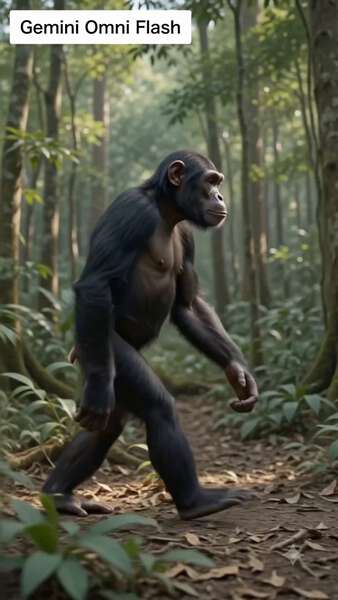
1. Ape-man (early primates)
2. Australopithecus
3. Homo erectus
4. Neanderthals
5. Cro-Magnons
6. Modern humans
Edit each scene to flow naturally.
Emphasize the sense of gradual evolution over time.
【Character Performance】
Characters walk from left to right continuously in all scenes.
Walking speed is always constant.
Ensure a sense of continuity in the same lineage across all scenes.
With evolution,
* Posture
* Facial features
* Build
* Fur amount
* Clothing
* Tools
* Gait
gradually evolve naturally.
Express it as evolution within the same lineage, not a switch to different people.
【Camera】
Maintain the same side-view composition in all scenes.
Keep camera distance constant.
Always capture the full body of the character.
Smoothly follow the walking motion.
No intense camera work.
Natural filming like a documentary film.
【Background Performance】
Background environments also evolve naturally with each era:
* Forest
* Grassland
* Arid region
* Glacial region
* Mountainous region
* Modern city
Make environmental changes connect naturally.
【Captions】
Display short Japanese captions in each scene indicating the era.
Display content:
* Ape-man (early primates)
* Australopithecus
* Homo erectus
* Neanderthals
* Cro-Magnons
* Modern humans
Caption style:
* Small size
* Elegant
* Non-intrusive to the footage
* Semi-transparent
* White or light gray
* Bottom center display
* Subtle fade-in and fade-out
* In the style of BBC Earth or NHK Special
* Minimal elegant documentary-style typography
Important:
* Do not hide characters with captions
* No flashy animations
* No YouTube-style UI
* No variety show style
【Music】
Majestic and grand classical music evoking the beginning of the universe or human history.
Intellectual and mystical atmosphere.
Emotional build-up like a movie trailer.
【Important】
Strictly reference the uploaded storyboard.
Maintain the panel layout, era changes, and walking direction.
In the final video, do not display:
* Storyboard frames
* Annotations
* UI
* Page information
* Production notes
【Negative Prompt】
Slow motion, unnatural movements, dancing, exaggerated acting, robotic movements, unnatural muscles, deformed limbs, blurry faces, low-quality textures, fantasy effects, sci-fi effects, mutations, intense camera work, static background figures, low resolution, anime-style expressions, comical expressions, unnatural walking, camera angle changes, switching to different people, excessive motion blur.
documentary
evolution
history
cinematic
realistic
storyboard
 Kling 3.0