 Gemini Omni Flash
Istanbul 20-Era Time-Travel Selfie in 10 Seconds
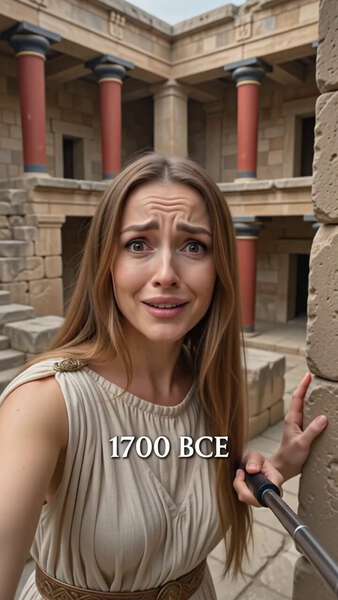
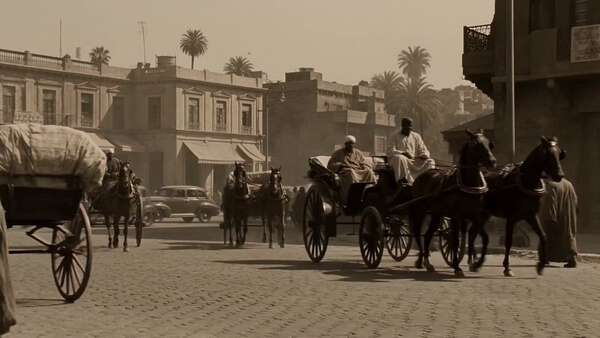
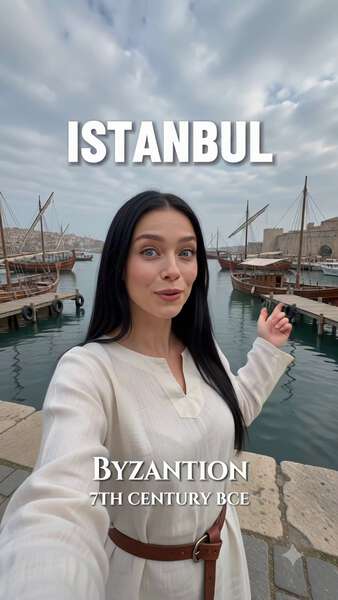
Create a 10-second hyper-realistic cinematic hyper-lapse selfie time-travel video of the uploaded character in Istanbul. REFERENCE USAGE: Use the uploaded character as a strict identity reference. Preserve the exact same face, hair, skin tone, body proportions, age, and natural facial features across all eras. Only the outfit changes according to each historical period. CONCEPT: The character travels through 20 different historical eras of Istanbul in rapid selfie-travel style. Each era must show period-accurate clothing, architecture, streets, objects, materials, and atmosphere. This is a peaceful cultural history tour focused on architecture, daily life, fashion, waterfront culture, bazaars, palaces, gardens, ferries, and city atmosphere. IMPORTANT: The very first shot must immediately feel unmistakably like Istanbul. The opening location must be era-appropriate, but geographically recognizable as Istanbul from the first frame. Use the Bosphorus / Golden Horn feeling, the Historic Peninsula-like coastal geography, steep layered waterfront topography, and an ancient strategic harbor atmosphere so the opening is clearly Istanbul. Do not use modern objects in historical eras. OPENING TITLE RULE: At the very beginning, show a large centered title: "ISTANBUL" The title must appear in big uppercase letters in the center of the screen. It should feel cinematic, elegant, and bold. After appearing briefly, the word "ISTANBUL" must erase away / wipe away / dissolve away smoothly and disappear, revealing the time-travel sequence. The title must vanish quickly and stylishly. CAMERA STYLE: Handheld selfie-stick camera angle. Wide-angle lens. The character's face is always clearly visible in the foreground. Each scene has a different historical Istanbul background visible behind the character. Fast hyper-lapse rhythm with hard cuts on every beat. No static shots. No logos, no watermarks. BOTTOM DATE TEXT RULE: Each scene must show a clean, readable 2-line date label at the bottom center of the screen. The bottom label must be slightly larger than a normal subtitle, easy to read during fast cuts, but it must not cover the character's face. Use an elegant cinematic caption style, clean serif or elegant sans-serif font, warm off-white color, subtle dark shadow, high readability. Place the label at the bottom center inside a safe lower margin. Always use exactly 2 lines: Line 1 = era name Line 2 = date / century Do not place the era and date on the same line. Do not place text anywhere else except the opening title. Do not use big subtitle boxes. Do not cover the face, hands, or important landmarks. 20 ISTANBUL ERAS, OUTFITS, LOCATIONS, POSES, AND BOTTOM TEXT: 1. Ancient Byzantion, 7th century BCE Bottom text: Line 1: "BYZANTION" Line 2: "7TH CENTURY BCE" Setting: clearly recognizable ancient Istanbul coastal geography, strategic harbor, wooden piers, fishing boats, stone houses, early waterfront settlement. Outfit: simple linen tunic, leather belt, sandals. Pose: curious smile, pointing toward the harbor. 2. Greek Byzantion, 5th century BCE Bottom text: Line 1: "GREEK BYZANTION" Line 2: "5TH CENTURY BCE" Setting: coastal agora-like settlement, pottery stalls, marble fragments, fishing life. Outfit: light Greek-style chiton with simple shawl. Pose: warm smile, showing the market behind. 3. Roman Byzantium, 2nd century CE Bottom text: Line 1: "ROMAN BYZANTIUM" Line 2: "2ND CENTURY CE" Setting: Roman stone road, columns, bathhouse exterior, marketplace. Outfit: cream Roman tunic with soft red cloak. Pose: confident hand wave. 4. New Rome, 330 CE Bottom text: Line 1: "NEW ROME" Line 2: "330 CE" Setting: imperial construction atmosphere, marble columns, forums, craftsmen. Outfit: elegant late-Roman robe with gold trim. Pose: amazed expression. 5. Constantinople, 5th century Bottom text: Line 1: "CONSTANTINOPLE" Line 2: "5TH CENTURY" Setting: Theodosian Walls, stone gates, wide city road. Outfit: dark blue Byzantine-style cloak, embroidered collar. Pose: proud smile. 6. Justinian Era, 6th century Bottom text: Line 1: "JUSTINIAN ERA" Line 2: "6TH CENTURY" Setting: Hagia Sophia as a Byzantine church, giant dome, cross on top, no minarets. Outfit: ivory Byzantine silk dress with gold details. Pose: awe-filled expression, looking up. 7. Byzantine Hippodrome, 6th century Bottom text: Line 1: "BYZANTINE HIPPODROME" Line 2: "6TH CENTURY" Setting: Obelisk of Theodosius, lively public square, ceremonial atmosphere. Outfit: ceremonial Byzantine outfit. Pose: excited smile. 8. Middle Byzantine Era, 9th century Bottom text: Line 1: "MIDDLE BYZANTINE ERA" Line 2: "9TH CENTURY" Setting: monastery courtyard, mosaics, arches, candles. Outfit: modest dark Byzantine robe with patterned shawl. Pose: calm respectful smile. 9. Komnenian Constantinople, 12th century Bottom text: Line 1: "KOMNENIAN CONSTANTINOPLE" Line 2: "12TH CENTURY" Setting: Blachernae Palace exterior, noble gardens, palace walls. Outfit: rich burgundy Byzantine noble outfit. Pose: serious cinematic gaze. 10. Late Byzantium, early 15th century Bottom text: Line 1: "LATE BYZANTIUM" Line 2: "EARLY 15TH CENTURY" Setting: old stone streets, Orthodox courtyards, aging walls. Outfit: muted Byzantine dress, dark head covering. Pose: reflective expression. 11. Istanbul Transition Era, 15th century Bottom text: Line 1: "ISTANBUL TRANSITION ERA" Line 2: "15TH CENTURY" Setting: historic peninsula streets, craftsmen, markets, wooden houses. Outfit: practical dark travel cloak over period dress. Pose: thoughtful look. 12. Early Ottoman Istanbul, late 15th century Bottom text: Line 1: "EARLY OTTOMAN ISTANBUL" Line 2: "LATE 15TH CENTURY" Setting: Topkapi Palace courtyards, tiled details, gardens, peaceful city life. Outfit: early Ottoman-style silk kaftan, embroidered belt. Pose: warm welcoming smile. 13. Classical Ottoman Era, 16th century Bottom text: Line 1: "CLASSICAL OTTOMAN ERA" Line 2: "16TH CENTURY" Setting: Suleymaniye Mosque area, craftsmen, stone courtyards, elegant skyline. Outfit: Ottoman court-inspired kaftan with soft headscarf. Pose: proud graceful look. 14. Grand Bazaar, 16th century Bottom text: Line 1: "GRAND BAZAAR" Line 2: "16TH CENTURY" Setting: covered bazaar corridors, lanterns, spices, textiles, merchants. Outfit: colorful Ottoman market dress with patterned shawl. Pose: playful smile. 15. Tulip Era, early 18th century Bottom text: Line 1: "TULIP ERA" Line 2: "EARLY 18TH CENTURY" Setting: waterfront mansions, tulip gardens, fountains. Outfit: pastel Ottoman dress with floral embroidery. Pose: elegant smile, holding a tulip. 16. Ottoman Modernization, 19th century Bottom text: Line 1: "OTTOMAN MODERNIZATION" Line 2: "19TH CENTURY" Setting: Dolmabahce Palace exterior, gas lamps, horse carriages. Outfit: Victorian-Ottoman hybrid dress, lace gloves, small hat. Pose: refined smile. 17. Galata & Pera, early 1900s Bottom text: Line 1: "GALATA & PERA" Line 2: "EARLY 1900S" Setting: Galata Tower, tram street, European-style buildings, cafes. Outfit: Edwardian-style Istanbul street outfit, long coat, small hat. Pose: stylish smirk. 18. Bosphorus Ferry Era, 1920s Bottom text: Line 1: "BOSPHORUS FERRY ERA" Line 2: "1920S" Setting: old ferries, misty Bosphorus, waterfront houses. Outfit: modest dark coat, scarf, period boots. Pose: calm direct eye contact. 19. Early Republic, 1930s Bottom text: Line 1: "EARLY REPUBLIC" Line 2: "1930S" Setting: clean boulevards, ferries, Art Deco details. Outfit: 1930s tailored coat, cloche hat, leather gloves. Pose: optimistic smile. 20. Modern Istanbul, present day Bottom text: Line 1: "MODERN ISTANBUL" Line 2: "PRESENT DAY" Setting: Bosphorus skyline, Galata Tower, ferries, historic peninsula at golden hour. Outfit: stylish modern travel outfit, light jacket, sunglasses. Pose: final bright smile. EDITING: 10 seconds total. 20 rapid hard cuts. Each cut jumps into a new era of Istanbul. The opening title "ISTANBUL" appears large in the center and then erases / dissolves away. The character remains in selfie-stick mode in every shot. Face close to camera, historical background clearly visible. Keep the bottom 2-line date label visible in every scene. VISUAL STYLE: Ultra-realistic live-action cinematic look. High-budget historical reconstruction. Accurate period clothing, architecture, materials, lighting, streets, markets, boats, gardens, and daily-life details. Natural skin texture, realistic fabric movement, sea breeze, warm light, cinematic depth of field. No fantasy, no animation, no illustration. NEGATIVE PROMPT: No violence, no war, no weapons, no explosions, no soldiers, no military scenes, no political symbols, no destruction, no modern skyline in ancient or medieval scenes, no identity drift, no face changes, no oversized subtitle blocks, no misplaced text, no tiny unreadable text, no one-line date labels, no text covering the face, no modern objects in historical scenes.